
Service
Technical catalogs and practical answers to common bearing questions.
Downloads
Explore JVAV bearing families and practical guidance for application planning.
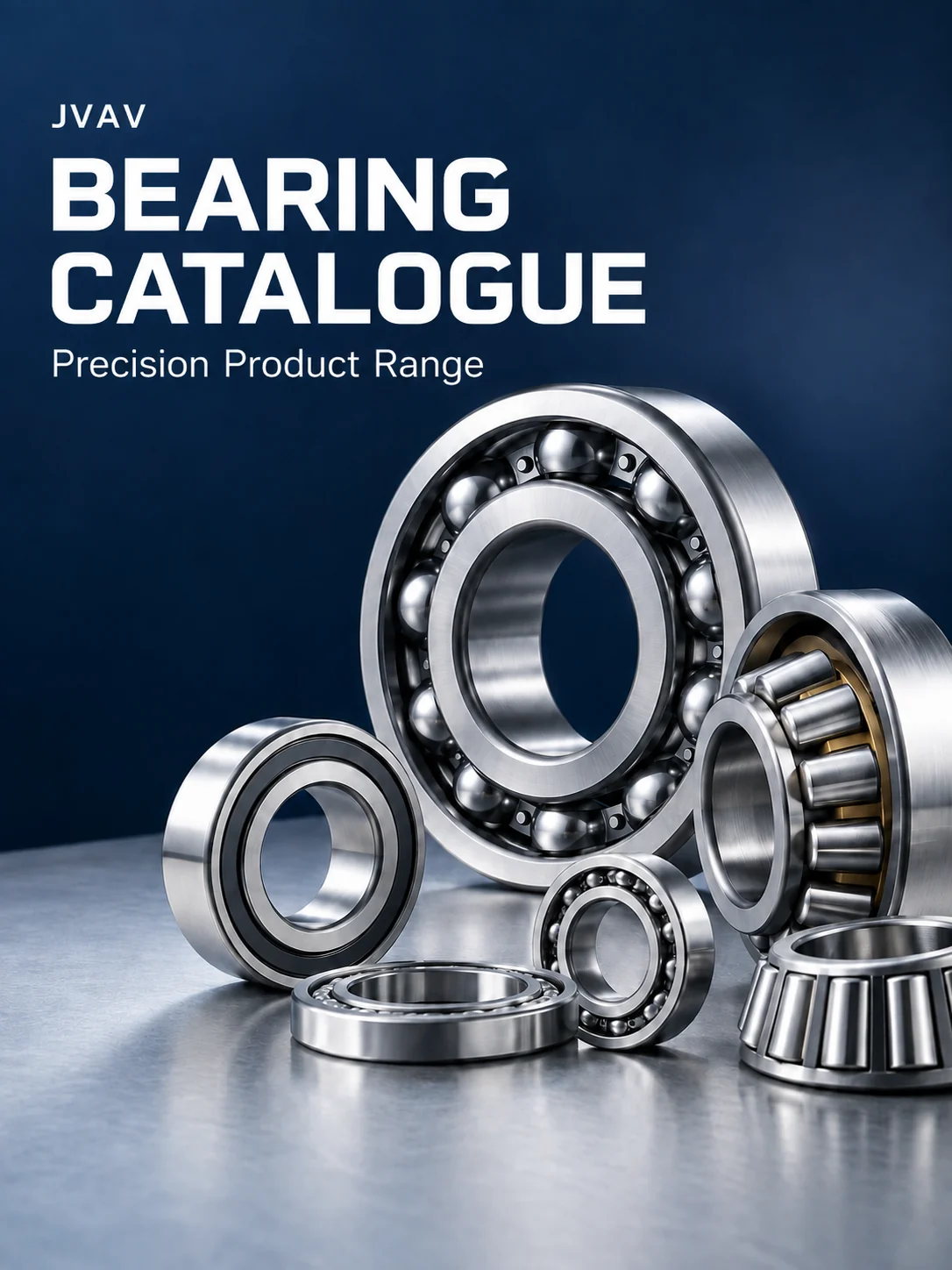
JVAV Bearing Catalogue
Browse the JVAV range of ball, roller and linear bearings. Compare product families, typical applications and key specifications to identify options for your equipment.
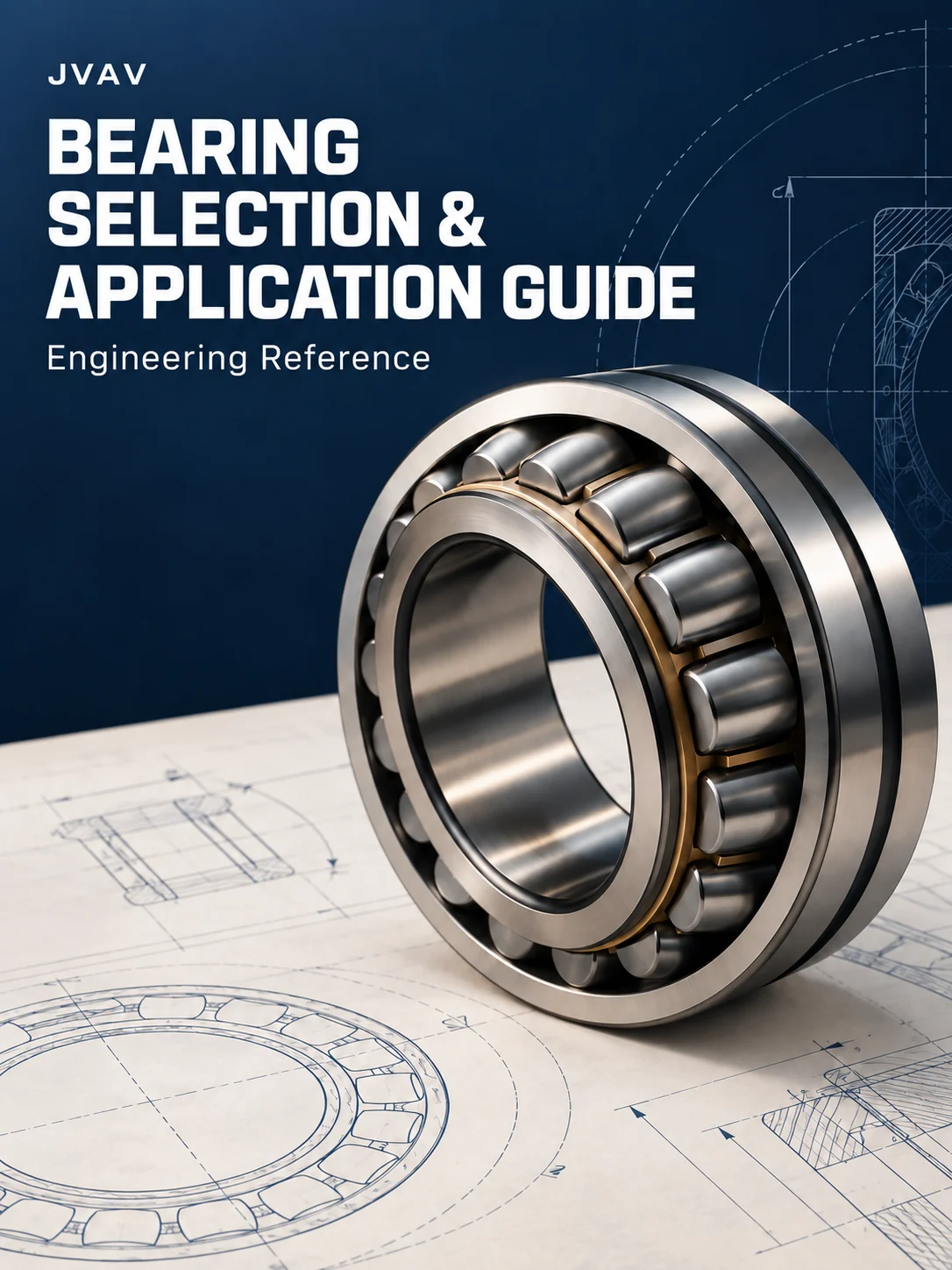
Bearing Selection & Application Guide
Review the main factors in bearing selection, including load, speed, operating temperature, lubrication and mounting. Use these points to organize your requirements for a technical discussion.
Frequently Asked Questions
Practical starting points for bearing selection, installation and care.
Selection
What information is useful when selecting a bearing?
Start with shaft and housing dimensions, radial and axial loads, operating speed, temperature, contamination and the required service life. The mounting arrangement and lubrication method also affect the choice.
How do radial and axial loads differ?
A radial load acts across the shaft; an axial load acts along it. Bearing types handle these loads in different proportions, so compare the application loads with the limits in the relevant product data.
When should I consider a sealed bearing?
A sealed bearing can help where dust or moisture exposure is a concern. Seal type, friction, speed and operating temperature should all be checked against the application requirements.
Can the catalogue confirm product availability and suitability?
No. It is a general product and application overview. Confirm current availability, specifications and suitability with our technical team before choosing a bearing.
Installation & Care
What matters most during installation?
Keep the bearing and mounting surfaces clean. Apply fitting force to the ring being mounted, avoid transmitting force through the rolling elements, and follow the bearing manufacturer’s fitting instructions.
What can cause unusual bearing noise or heat?
Possible causes include misalignment, contamination, incorrect fit, unsuitable lubrication or damage. Stop and inspect the installation if noise or temperature changes unexpectedly.
How often should lubrication be checked?
There is no single interval for every bearing. Lubricant type, speed, load, temperature and contamination all matter. Use the product guidance and the equipment maintenance schedule to set inspection and relubrication intervals.
Can a bearing be reused after removal?
Removal can damage a bearing even when the damage is not immediately visible. Assess its condition and the removal method against the manufacturer’s guidance before considering reuse.