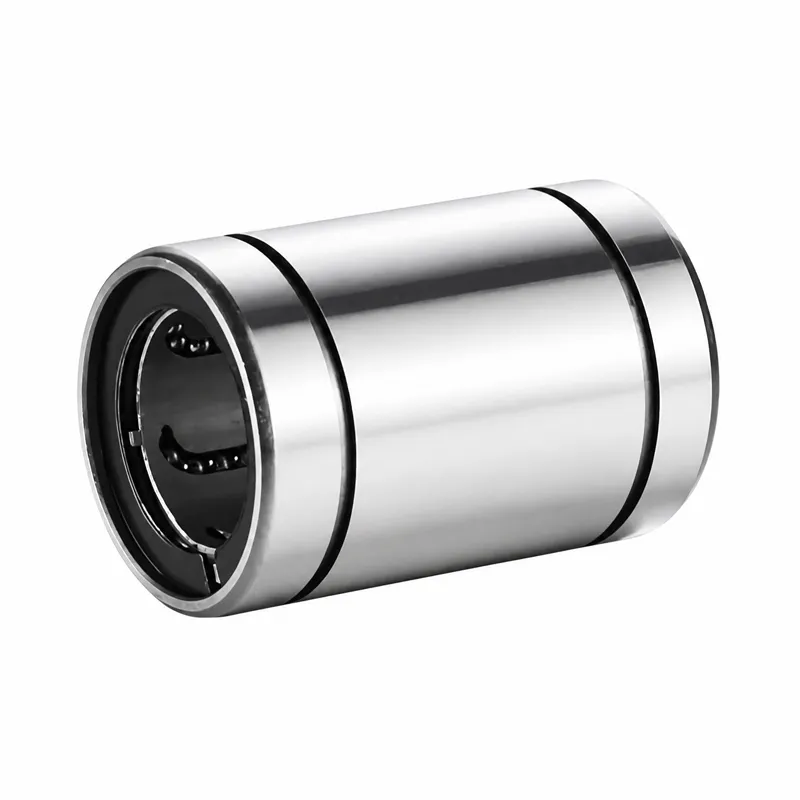
Product
Linear bearing
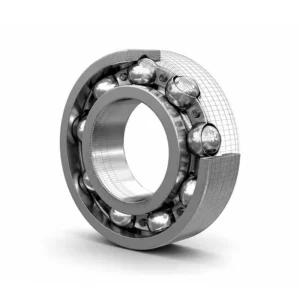
Linear bearings are linear motion systems used in conjunction with optical shafts to perform reciprocating linear motion. They are low-cost linear motion units, employing a ball circulation structure where the balls circulate infinitely within the cage, achieving low-friction sliding.
Product Details
Product Introduction
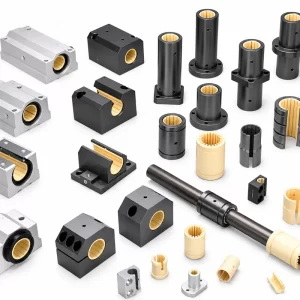
Linear bearings are linear motion systems used in conjunction with optical shafts to perform reciprocating linear motion. They are low-cost linear motion units, employing a ball circulation structure where the balls circulate infinitely within the cage, achieving low-friction sliding. Features include low frictional resistance, fast response, high interchangeability, and simple installation; however , they can only withstand radial loads and cannot withstand axial forces . Common types include: standard linear bearings LM (through-bore), extended type LML, flange type LMF/LMK/LMH, adjustable clearance type LM-A, stainless steel linear bearings, and resin cage models. Materials: bearing steel outer shell + steel balls; cages are available in plastic/brass; stainless steel models are suitable for humid and rust-prone environments.
Precautions
1.The matching shaft must be smooth; a hardened smooth shaft with a surface hardness of around HRC60 is recommended. A rough shaft surface will drastically shorten its lifespan.
2.Linear bearings do not bear axial loads and cannot be used alone in situations involving axial thrust.
3.Dust protection: For environments with dust or metal filings, it is recommended to use a dustproof ring or choose a dustproof model, as foreign objects entering may jam the ball bearings.
4.Lubrication: Pre-lubricated at the factory; lithium-based grease needs to be replenished periodically for high-speed/long-term operation; dry running is prohibited.
5.Do not directly strike the end face during installation, as this can easily cause the cage to deform or the steel balls to fall out.
6.Clearance selection: Standard clearance and small clearance are adjustable. Select small clearance for high speed and light load; select standard clearance for heavy load and low speed.
7.Storage: Keep away from moisture and rust, and avoid prolonged pressure to prevent deformation.
Installation Method
1.Pre-treatment: Clean the inner bore of the bearing and the surface of the optical shaft to remove burrs and iron filings.
2.Pressing the bearing into the housing: Use a pressure sleeve to apply even pressure to the outer ring end face of the bearing. Do not press the inner ring directly . Press the bearing into the bearing housing hole.
3.Insert the optical axis: Align it with the axis and push it in smoothly. Do not tilt or force it in, as tilting will scratch the steel balls and the cage.
4.Fixed limit: Install a retaining ring/circuit ring to prevent axial movement of the bearing.
5.Test movement: Manually slide back and forth to confirm that it is smooth without any sticking or obvious gaps or wobbling.
6.Lubrication check completed; installation finished.
Usage Locations (Application Scenarios)
Automation equipment, CNC equipment, 3D printers, packaging machinery, textile machinery, laser equipment, engraving machines, robotic arms, conveying equipment, testing instruments, office automation equipment, and sliding mechanisms for small machine tools.